


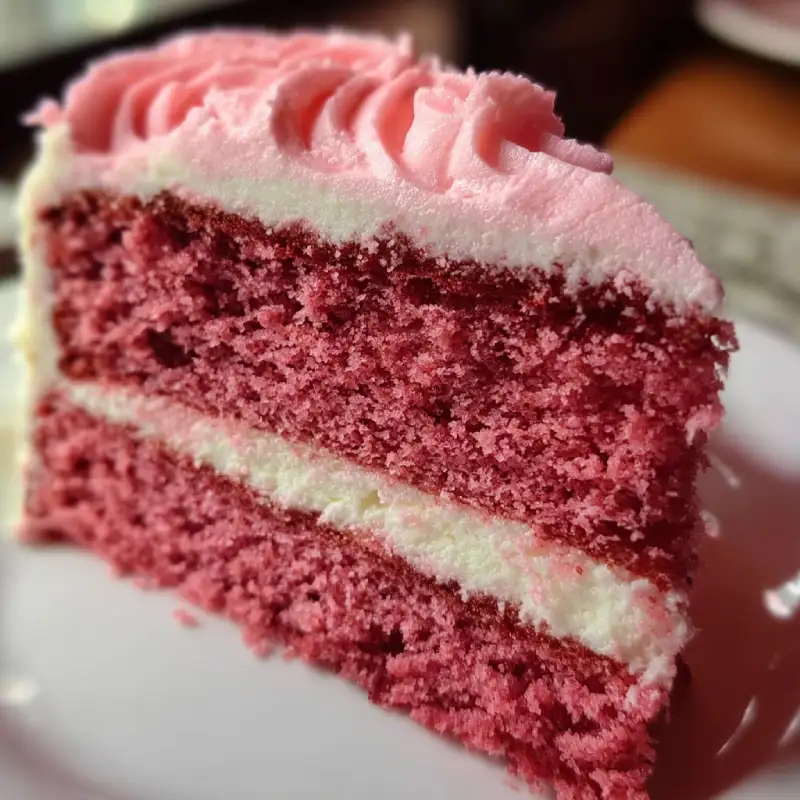
Introduction: Why Pink Velvet Cake?
Imagine a slice of pure delight so charmingly delicate, yet unbelievably moist and flavorful. That, my friends, is the magic of a Pink Velvet Cake. It’s not just a cake; it’s an experience, a joyful rebellion against the ordinary, a dessert that instantly brings a smile to anyone’s face. While Red Velvet has long held the spotlight, its rosy cousin, the Pink Velvet Cake, offers the same beloved tender crumb and creamy tang, but with a softer, more whimsical aesthetic.
My personal journey to the perfect Pink Velvet Cake began with a quest for something truly special for a dear friend’s birthday. I wanted a cake that was beautiful, tasted incredible, and felt like a warm hug. After countless experiments, tweaking ratios, and perfecting techniques, I finally landed on *this* recipe. It’s the one I return to again and again, and I’m so excited to share it with you!
The allure of Pink Velvet lies in its irresistible combination of subtle cocoa flavor, extraordinary moistness, and that signature tangy cream cheese frosting, all wrapped up in an enchanting pastel hue. It’s truly a cake that tastes even better than it looks – and that’s saying something!
Table of Contents
- Why This Pink Velvet Cake Recipe Stands Out
- Ingredients Unpacked: What You Need & Why
- Step-by-Step Baking Guide: From Batter to Beautiful Cake
- Expert Tips for a Flawless Pink Velvet Cake
- What to Serve With Your Pink Velvet Cake
- Storing and Reheating Your Pink Velvet Cake
- Pink Velvet Cake FAQ (Your Questions Answered)
Why This Pink Velvet Cake Recipe Stands Out
- Unmatched Moistness: Thanks to the combination of buttermilk and oil, this Pink Velvet Cake boasts a crumb that’s incredibly soft, tender, and stays moist for days, unlike many dry cake recipes out there.
- Perfectly Balanced Sweetness: We’ve carefully calibrated the sugar to ensure a delightful sweetness that doesn’t overwhelm, allowing the subtle cocoa and vanilla notes to shine through.
- Vibrant, Natural-Looking Pink: Forget dull or artificial-looking hues! We’ll guide you to achieve a truly beautiful, eye-catching pink that’s both elegant and fun.
- The Dreamy Cream Cheese Frosting: This isn’t just any frosting; it’s a luscious, tangy cream cheese frosting that provides a perfect counterpoint to the cake’s sweetness, tying all the flavors together in harmonious bliss.
Ingredients Unpacked: What You Need & Why
Every ingredient in this Pink Velvet Cake recipe plays a crucial role in achieving that perfect taste and texture. Let’s break it down:
All-Purpose Flour: The structural backbone of our cake! I always recommend unbleached for the best flavor. For an even lighter, more delicate crumb, you can substitute cake flour (just remember to weigh it, as cake flour is lighter by volume).
Unsweetened Cocoa Powder: This provides the subtle, signature cocoa flavor of velvet cakes. Don’t use Dutch-processed here; we need the acidity of natural cocoa to react with our leavening agents.
Granulated Sugar: For sweetness and tenderness. It also helps with browning and moisture retention.
Baking Soda & Baking Powder: Our dynamic duo for lift! Baking soda reacts with the acidic buttermilk and cocoa, while baking powder provides an extra boost, ensuring a light and airy crumb.
Salt: Don’t skip it! A pinch of salt enhances all the other flavors, making the cake taste richer and more complex.
Vegetable Oil: Unlike butter-based cakes, oil contributes to an incredibly moist crumb that stays soft longer. It also ensures the cake’s texture is wonderfully tender.
Buttermilk: The star of velvet cakes! Its acidity tenderizes the cake crumb by breaking down gluten and reacts with the baking soda for lift. It also adds a slight tang that is essential to the velvet cake flavor profile.
Large Eggs: Bind the ingredients, add moisture, richness, and contribute to the cake’s structure. Ensure they are at room temperature for better emulsion.
Vanilla Extract: A crucial flavor enhancer. Use a good quality pure vanilla extract for the best results.
Pink Food Coloring: This is how we get our vibrant pink! Gel food coloring is highly recommended over liquid, as it provides a more intense color without adding excess moisture to the batter. You can look for natural options or beetroot powder for a milder, more subtle pink, though it may not be as vibrant. For precise color guidance, refer to King Arthur Baking’s guide on food coloring.
White Vinegar: The secret weapon! It enhances the red/pink color (though less necessary with modern food coloring) and, more importantly, reacts with the baking soda to create those signature tender air pockets in the cake.
Cream Cheese (for frosting): Full-fat block cream cheese is a must for a stable, flavorful frosting. No spreadable tub varieties here!
Unsalted Butter (for frosting): Provides richness and structure to the frosting. Make sure it’s softened to room temperature.
Powdered Sugar (for frosting): Sweetens and thickens the frosting. Sifting it prevents lumps!
Vanilla Extract (for frosting): Adds a lovely warmth to the tangy frosting.
Step-by-Step Baking Guide: From Batter to Beautiful Cake
Ready to create some magic? Follow these detailed steps to bake your perfect Pink Velvet Cake:
1. Prepare Your Pans for Success
Preheat your oven to 350°F (175°C). Grease and flour two 8-inch round cake pans. For extra insurance against sticking, line the bottoms with parchment paper circles. This small step makes a huge difference when it comes to releasing your beautiful cakes!
2. Crafting the Perfect Pink Velvet Batter
In a large bowl, whisk together all your dry ingredients: flour, cocoa powder, granulated sugar, baking soda, baking powder, and salt. Make sure there are no lumps. In a separate medium bowl, whisk together the wet ingredients: buttermilk, vegetable oil, eggs, vanilla extract, and pink food coloring. Start with a few drops of gel coloring, knowing you can add more to reach your desired shade. Pour the wet ingredients into the dry ingredients and mix on low speed with an electric mixer until *just* combined. Add the white vinegar and mix for another 30 seconds until the batter is smooth and a uniform pink. Do not overmix! Overmixing develops gluten, leading to a tough cake.
3. The Baking Process
Divide the batter evenly between your prepared cake pans. Bake for 28-32 minutes, or until a wooden skewer inserted into the center of the cakes comes out clean. The edges should be lightly golden and spring back when gently pressed. Avoid opening the oven door too early, especially in the first 20 minutes, as this can cause the cakes to sink.
4. Cooling Properly
Once baked, let the cakes cool in their pans on a wire rack for 10-15 minutes. This allows them to firm up slightly, making them easier to handle. After this initial cooling, invert the cakes onto a wire rack, remove the pans and parchment paper, and let them cool completely. This is crucial! Frosting warm cakes will result in a messy, melty situation.
5. Whipping Up the Dreamy Cream Cheese Frosting
In a large bowl with an electric mixer, beat the softened cream cheese and unsalted butter together until smooth and creamy, about 2-3 minutes. Scrape down the sides of the bowl. Gradually add the sifted powdered sugar, one cup at a time, mixing on low speed until combined, then increasing to medium until fluffy. Beat in the vanilla extract. If the frosting is too thick, add a tiny splash of milk or cream. If it’s too thin, add more sifted powdered sugar. The consistency should be spreadable but firm enough to hold its shape.
6. Assembling and Decorating Your Masterpiece
Once your cakes are completely cool, you can level them if desired for a neater look. Place one cake layer on your serving plate or cake stand. Spread about a third of the frosting evenly over the top. Place the second cake layer on top and spread the remaining frosting over the top and down the sides of the cake. For a smooth finish, use an offset spatula or bench scraper. Decorate with sprinkles, fresh berries, or chocolate shavings if you like! See more easy recipes and decorating tips!
Expert Tips for a Flawless Pink Velvet Cake
- Room Temperature Ingredients: The Non-Negotiable: Ensure your eggs, buttermilk, cream cheese, and butter are all at room temperature. This allows them to emulsify properly, creating a smoother batter and a creamier frosting.
- Don’t Overmix: Understanding Gluten Development: Mix the batter until *just* combined. Overmixing activates gluten in the flour, leading to a tough, dense cake. A few small lumps in the batter are perfectly fine.
- Measuring Flour Correctly: Avoid a Dry Cake: Always spoon your flour into your measuring cup and then level it off with a straight edge. Dipping the cup directly into the flour can compact it, leading to too much flour and a dry cake. Better yet, weigh your flour with a kitchen scale (1 cup AP flour = 120 grams).
- Achieving True Pink: Food Coloring Guidance: Gel food coloring is your best friend for vibrant hues without affecting the batter consistency. Start with a few drops, mix, and add more until you reach your desired shade. Remember, the color often deepens slightly upon baking.
- Frosting Consistency: How to Get it Right: If your cream cheese frosting is too soft, chill it in the refrigerator for 20-30 minutes, then beat it again. If it’s too stiff, add a teaspoon of milk or cream at a time until it reaches a spreadable consistency.
- Leveling Your Cakes: For Professional Results: For perfectly flat cake layers and a professional-looking finish, use a serrated knife or a cake leveler to trim any domes off your cooled cake layers.
What to Serve With Your Pink Velvet Cake
This delightful Pink Velvet Cake pairs wonderfully with a variety of beverages and simple garnishes. For drinks, a robust cup of coffee or a delicate black tea cuts through the richness beautifully. A cold glass of milk is always a classic, comforting choice! To elevate its presentation and taste, consider garnishing with a sprinkle of pink sanding sugar, fresh raspberries or strawberries, or even a few delicate white chocolate shavings for an extra touch of elegance.
Storing and Reheating Your Pink Velvet Cake
To keep your Pink Velvet Cake fresh and delicious, proper storage is key.
- Optimizing Freshness: Because of its cream cheese frosting, this cake should always be stored in the refrigerator. Cover it tightly with plastic wrap or place it in an airtight cake carrier to prevent it from drying out or absorbing refrigerator odors. It will stay fresh for up to 3-4 days. You can also store it at cool room temperature (below 70°F/21°C) for up to 1-2 days, but refrigeration is highly recommended for longer freshness.
- Freezing for Later: Best Practices: For longer storage, you can freeze individual slices or an entire unfrosted cake. For slices, wrap each piece tightly in plastic wrap, then again in aluminum foil. For an unfrosted cake, wrap cooled layers tightly in plastic wrap. Freeze for up to 2-3 months.
- Bringing Back to Life: Gentle Reheating Tips: To serve, transfer the cake or slices from the freezer to the refrigerator to thaw overnight. For frosted cake, let it come to room temperature for at least 30-60 minutes before serving. This allows the frosting and cake to soften to their ideal texture and flavor.