


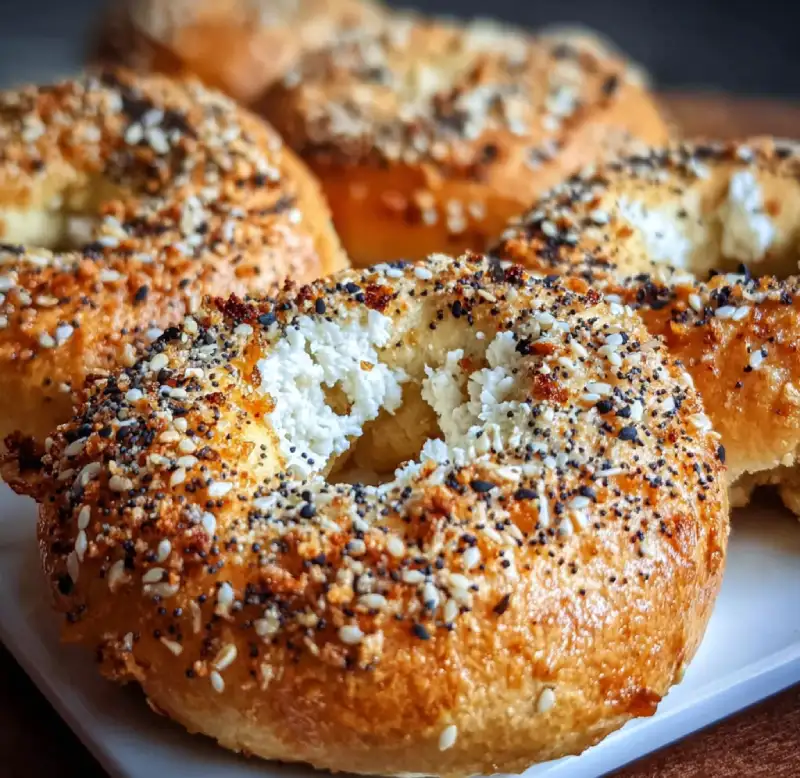
Crafting the Perfect Greek Yogurt Bagels: Your New Breakfast Obsession
Imagine biting into a perfectly chewy, golden-brown bagel, fresh from your oven, with that delightful tang that only homemade can deliver. Now, imagine achieving that without yeast, without boiling, and with just two main ingredients! That’s the magic of these Greek yogurt bagels. My journey to the best homemade bagels has been a delicious one, filled with experiments and taste tests, and I’m thrilled to share the recipe that consistently produces bagels so good, you’ll wonder why you ever bought them from a store. The texture is incredibly satisfying – a crisp exterior giving way to a soft, dense, and wonderfully chewy interior. And the flavor? It’s bright, slightly tangy, and the perfect canvas for all your favorite toppings. Get ready to make these your new breakfast obsession!
Table of Contents
- Why This Greek Yogurt Bagel Recipe Delivers
- Essential Ingredients & Smart Substitutions for Your Bagels
- Step-by-Step: Making Your Greek Yogurt Bagels
- Expert Tips for Greek Yogurt Bagel Success
- What to Serve with Your Freshly Baked Bagels
- Storing and Reheating Your Homemade Bagels
- Frequently Asked Questions About Greek Yogurt Bagels
Why This Greek Yogurt Bagel Recipe Delivers
- Achieving Chewy Texture (Without Yeast!): The combination of self-rising flour and Greek yogurt creates a dough with incredible elasticity, mimicking the chewiness of traditional bagels without the need for yeast or a lengthy proofing process.
- Flavor Boost from Greek Yogurt: The full-fat Greek yogurt not only provides moisture and structure but also imparts a subtle, delightful tang that elevates the flavor profile of these Greek yogurt bagels, making them truly irresistible.
- Simpler Process, Faster Results: Forget the multi-step, time-consuming process of traditional bagel making. This recipe is incredibly straightforward, allowing you to enjoy fresh, homemade bagels in under an hour from start to finish.
- Versatile Beyond Breakfast: While perfect for breakfast, these bagels are sturdy enough for sandwiches, delicious as a snack, or even as a side with soup. Their versatility makes them a kitchen staple.
Essential Ingredients & Smart Substitutions for Your Bagels
Here is what you need and why:
Self-Rising Flour: The Leavening Secret: This is the star of our show! Self-rising flour already contains baking powder and salt, which react with the acidity of the Greek yogurt to create lift and that wonderful chewy texture. If you don’t have self-rising flour, you can easily make your own by combining 1 cup of all-purpose flour with 1.5 teaspoons of baking powder and 1/4 teaspoon of fine salt. Just be sure to whisk it very well!
Greek Yogurt: Why Full-Fat Matters: Opt for full-fat, plain Greek yogurt. The higher fat content contributes to a richer flavor and a more tender crumb. The thickness of Greek yogurt is also crucial for the dough’s consistency. While you *can* use lower-fat versions, the texture might be slightly less rich, and the dough could be a bit stickier. Avoid flavored yogurts, as they will alter the taste of your bagels significantly.
Egg Wash: For Shine and Seeding: A simple egg wash (one egg beaten with a tablespoon of water or milk) is essential for achieving that beautiful golden-brown crust and helping your toppings adhere perfectly. It gives the bagels a professional, glossy finish.
Optional Toppings: Customizing Your Creation: This is where you can truly make these Greek yogurt bagels your own! Everything bagel seasoning is a classic for a reason, but don’t stop there. Sesame seeds, poppy seeds, flaky sea salt, dried minced garlic, or even a sprinkle of cinnamon sugar for a sweet twist are all fantastic options. Have fun experimenting!
Flour Alternatives: What Works (and What Doesn’t): While self-rising flour is ideal, some readers ask about alternatives. Gluten-free self-rising flour can work, but the texture will be different – often less chewy and more cake-like. Regular all-purpose flour will not work on its own as it lacks the leavening agents needed for the rise and texture. Stick to self-rising or the homemade substitute for the best results.
Step-by-Step: Making Your Greek Yogurt Bagels
Follow these step-by-step photos:
1. Preparing Your Workspace and Oven
Preheat your oven to 375°F (190°C). Line a baking sheet with parchment paper or a silicone baking mat. This prevents sticking and makes cleanup a breeze. In a small bowl, whisk together one egg with a tablespoon of water or milk for your egg wash. Have your desired toppings ready in a shallow dish.
2. Mixing the Dough: Key to Consistency
In a medium mixing bowl, combine 2 cups of self-rising flour and 1.5 cups of full-fat Greek yogurt. Use a sturdy spoon or a spatula to mix until a shaggy dough forms. It will look a bit crumbly at first, but keep mixing. Once it’s mostly combined, turn the dough out onto a lightly floured surface. Knead for about 5-8 minutes until the dough is smooth, elastic, and no longer sticky. It should feel soft and pliable, not overly dry or wet. If it’s too sticky, add a tiny bit more flour, a teaspoon at a time. If it’s too dry, add a tiny bit more yogurt.
3. Forming the Bagels: The Simplest Method
Divide the dough into 6-8 equal pieces (depending on your desired bagel size). Roll each piece into a smooth ball. To form the bagel shape, you have two options: either poke a hole through the center of each ball with your thumb and gently stretch it to create a 1-inch opening, or roll each piece into a 6-inch rope and then connect the ends to form a circle. Ensure the hole is large enough, as it will shrink during baking. Place the formed bagels on your prepared baking sheet.
4. Applying the Egg Wash and Toppings
Brush the tops and sides of each bagel generously with the egg wash. This creates that beautiful golden crust and acts as the ‘glue’ for your toppings. Immediately sprinkle your chosen toppings (like everything bagel seasoning, sesame seeds, or poppy seeds) onto the wet egg wash. Don’t be shy – a good coating makes all the difference!
5. Baking for Golden Perfection
Bake the Greek yogurt bagels in your preheated oven for 20-25 minutes, or until they are golden brown and sound hollow when tapped on the bottom. The exact baking time can vary depending on your oven, so keep an eye on them. Once baked, transfer the bagels to a wire rack to cool slightly before slicing and serving. They are best enjoyed warm!
Expert Tips for Greek Yogurt Bagel Success
- Don’t Overmix the Dough: While you want a smooth, elastic dough, overmixing can lead to tough bagels. Knead just until it comes together and is no longer sticky.
- Achieving Even Bagel Shapes: For uniform bagels, use a kitchen scale to divide your dough into equal portions. This ensures even baking and a consistent look.
- The Importance of Egg Wash: Don’t skip the egg wash! It’s crucial for that beautiful golden color and for helping your toppings adhere.
- Adjusting Baking Time for Your Oven: Ovens vary, so use the baking time as a guide. Look for a deep golden-brown color and a firm texture.
- Creative Topping Combinations: Beyond the classics, try a mix of dried herbs, grated Parmesan cheese, or even a sweet cinnamon-sugar blend for a different flavor profile.
What to Serve with Your Freshly Baked Bagels
These homemade Greek yogurt bagels are incredibly versatile! For a classic experience, slather them with a generous amount of cream cheese – plain, chive, or even a sweet berry cream cheese. Beyond that, consider avocado and everything bagel seasoning for a trendy toast, or smoked salmon with capers and red onion for a luxurious brunch. For a savory option, they make fantastic breakfast sandwiches with egg, cheese, and bacon. If you’re leaning sweet, a smear of jam, honey, or even Nutella is divine. And of course, a good cup of coffee or tea is the perfect companion. For more delicious breakfast ideas, see more easy recipes!
Storing and Reheating Your Homemade Bagels
To keep your homemade Greek yogurt bagels fresh, store them in an airtight container or a resealable plastic bag at room temperature for up to 2-3 days. For longer storage, these bagels freeze beautifully! Once completely cooled, place them in a freezer-safe bag, removing as much air as possible, and freeze for up to 2-3 months. To revive stored bagels, a quick toast in the toaster oven or a few minutes in a regular oven (at 350°F/175°C) will bring them back to life, restoring their chewiness and warmth. If reheating from frozen, you can toast them directly from the freezer, or let them thaw at room temperature for an hour before toasting.
Frequently Asked Questions About Greek Yogurt Bagels
Can I use regular yogurt instead?
Why are my bagels dense?
How do I prevent sticky dough?
What’s the best way to get a chewy crust?
Can these be made gluten-free?
Easy Greek Yogurt Bagels
- Total Time: 40 minutes
- Yield: 6-8 bagels
Description
Discover how to make incredibly easy and delicious Greek yogurt bagels with just two main ingredients. Enjoy a chewy texture and fantastic flavor in under an hour!
Ingredients
- 2 cups self-rising flour (plus more for dusting)
- 1.5 cups full-fat plain Greek yogurt
- 1 large egg, beaten (for egg wash)
- 1 tbsp water or milk (for egg wash)
- Optional toppings: Everything bagel seasoning, sesame seeds, poppy seeds, flaky sea salt
Instructions
- Preheat oven to 375°F (190°C). Line a baking sheet with parchment paper.
- In a bowl, combine self-rising flour and Greek yogurt. Mix until a shaggy dough forms.
- Turn dough onto a lightly floured surface and knead for 5-8 minutes until smooth and elastic.
- Divide dough into 6-8 equal pieces. Roll each into a ball, then poke a hole through the center and stretch to form a bagel shape.
- Place bagels on the prepared baking sheet. Brush generously with egg wash and sprinkle with desired toppings.
- Bake for 20-25 minutes, or until golden brown. Cool on a wire rack before serving.
- Prep Time: 15 mins
- Cook Time: 25 mins