


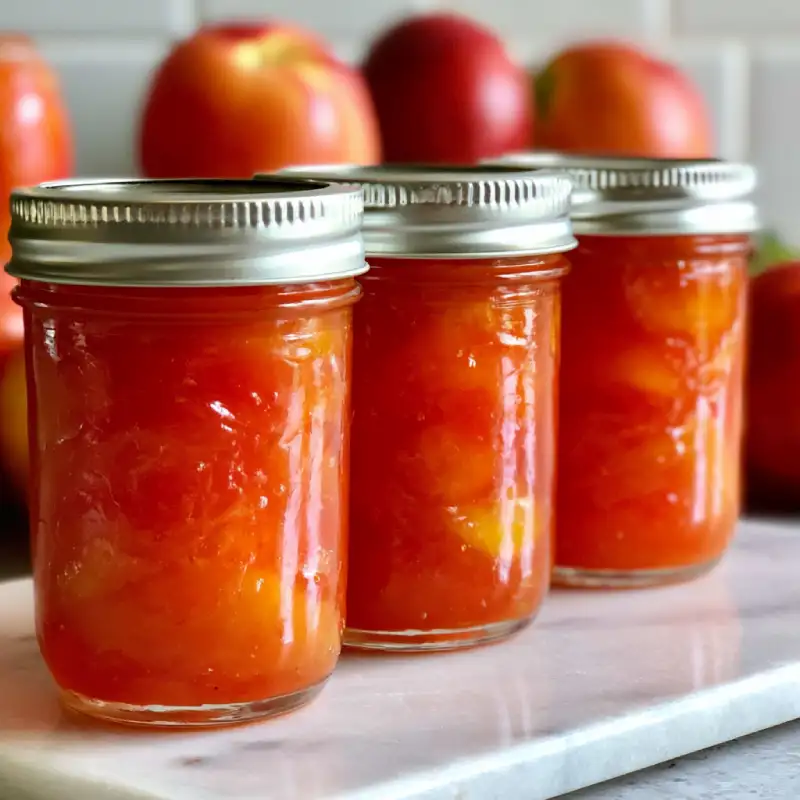
Make Beautiful Jam with Just 3 Ingredients!
Imagine spreading a vibrant, sun-kissed jam onto your morning toast – bursting with the sweet, tangy essence of summer nectarines. Now, imagine achieving that perfection with just three simple ingredients and no fuss over pectin! This 3 Ingredient Nectarine Jam Without Pectin recipe is about to become your new kitchen obsession. It’s incredibly easy, yielding a jam that’s naturally thick, beautifully spreadable, and intensely flavorful. Forget store-bought; once you taste this homemade delight, there’s no going back!
Unlock the Secret to Effortless, Flavorful Nectarine Jam. I’m here to tell you that making incredible jam doesn’t require a science degree or a pantry full of obscure ingredients. This recipe harnesses the natural pectin in ripe nectarines, combined with the magic of sugar and lemon, to create a truly spectacular spread. It’s a revelation for anyone who thought jam-making was too complicated.
My Kitchen’s Favorite: Why This Simple Recipe Wins. This recipe has earned its permanent spot in my kitchen for its sheer simplicity and stunning results. It’s a testament to how a few quality ingredients, handled with a little love, can produce something truly extraordinary. Plus, the aroma that fills your home as it simmers? Pure bliss!
Why This 3-Ingredient Nectarine Jam Recipe Works
- Naturally Thick & Spreads Beautifully: No Pectin Needed: The secret lies in using perfectly ripe nectarines, which contain enough natural pectin to set the jam without any added commercial pectin. A longer, slower cook also helps concentrate these natural setting agents.
- Intense Nectarine Flavor: Less Sugar, More Fruit: By relying on the fruit’s natural sweetness and a balanced amount of sugar, the vibrant, juicy flavor of the nectarines truly shines through. This isn’t an overly sweet, one-note jam; it’s a celebration of the fruit itself.
- Beginner-Friendly: Foolproof Method for Jam Success: If you’ve been intimidated by jam-making, this is your entry point! The steps are straightforward, and the process is forgiving, making it ideal for first-timers.
- Versatile: Easily Adaptable for Other Fruits: Once you master this technique, you’ll find it’s easily adaptable for other high-pectin fruits like plums, apples, or even some berries, making it a foundational recipe for your preserving repertoire.
The Three Essential Ingredients (And How to Choose Them)
Here is what you need and why:
Ripe Nectarines: Selecting for Sweetness and Natural Pectin: The star of our show! Choose nectarines that are fragrant, slightly soft to the touch, and free from blemishes. Riper fruit means more natural sweetness and, crucially, more natural pectin, which is essential for a good set without added pectin. Avoid hard, unripe fruit as it won’t yield the same flavor or setting power.
Granulated Sugar: The Role of Sweetener and Preservative: Sugar isn’t just for sweetness; it’s a vital component in jam-making. It helps draw out moisture from the fruit, acts as a preservative, and contributes to the jam’s texture and shine. While you might be tempted to reduce it drastically, remember its critical role in preservation and set. For this recipe, the ratio is carefully balanced to highlight the fruit.
Fresh Lemon Juice: Acidity for Flavor, Set, and Brightness: Don’t skip the lemon juice! It’s a triple threat: its acidity brightens the nectarine flavor, helps activate the natural pectin in the fruit, and prevents crystallization of the sugar. Always use fresh lemon juice for the best results; bottled juice can have a less vibrant flavor.
Ingredient Substitutions: What Works and What Doesn’t: While this recipe is designed for nectarines, you can use peaches (peeled, as their skins are fuzzy) with similar results, though they might have slightly less natural pectin. For sugar, you can experiment with light brown sugar for a deeper caramel note, but avoid liquid sweeteners like honey or maple syrup as they can alter the set and flavor significantly. As for lemon juice, lime juice can be a decent substitute in a pinch, but lemon is preferred for its classic jam-making properties.
Step-by-Step: Making Your Nectarine Jam
Follow these simple steps to create your delicious jam:
1. Prepare Your Nectarines: Washing, Halving, and Dicing
Start by thoroughly washing your nectarines. Halve them and remove the pits. You can peel them if you prefer a smoother jam, but I often leave the skins on for extra color and nutrients – they soften beautifully during cooking. Dice the nectarines into small, roughly 1/2-inch pieces. Smaller pieces will break down faster and create a smoother jam.
2. Combine Ingredients: Maceration for Flavor Extraction
In a large, heavy-bottomed pot or Dutch oven, combine the diced nectarines, granulated sugar, and fresh lemon juice. Stir everything together until the sugar is evenly distributed. Let this mixture sit at room temperature for at least 30 minutes, or even a few hours (or overnight in the fridge). This process, called maceration, draws out the fruit’s juices, creating a flavorful syrup and helping the fruit break down more easily during cooking.
3. Simmer to Perfection: Achieving the Jam Consistency
Place the pot over medium-high heat and bring the mixture to a rolling boil, stirring frequently to prevent scorching. Once boiling, reduce the heat to medium-low and maintain a steady simmer. Cook, stirring occasionally, for 25-40 minutes. The jam will thicken as it cooks, and the fruit will break down. You’re looking for the jam to coat the back of a spoon and for the bubbles to become thicker and slower.
4. Testing for Set: The Cold Plate Method
To check if your jam is set, place a small plate in the freezer before you start cooking. When you think the jam is ready, spoon a small amount onto the cold plate. Return the plate to the freezer for 1-2 minutes. Remove it and gently push the jam with your finger. If it wrinkles and holds its shape, it’s set! If it’s still too runny, continue cooking for another 5-10 minutes and retest. For more detailed guidance, you can check out this guide on making jam without pectin.
5. Jarring and Storing: Proper Technique for Longevity
Once the jam has reached its set point, carefully ladle it into clean, sterilized jars, leaving about 1/4 inch of headspace. Wipe the rims clean, apply lids, and screw on the bands until fingertip tight. For short-term storage, allow the jars to cool completely on the counter before refrigerating. For longer, shelf-stable storage, you’ll need to process them in a boiling water bath (see ‘Canning for Pantry Storage’ below).
Expert Tips for Perfect Nectarine Jam
- Don’t Rush the Cook: Patience for the Best Set: Jam-making is a patient art. Rushing the cooking process can lead to a runny jam. Allow it to simmer gently and consistently until it reaches the desired thickness.
- Stirring is Key: Preventing Scorching: Especially as the jam thickens, it’s crucial to stir frequently, scraping the bottom of the pot to prevent the fruit from sticking and scorching.
- Adjusting Sweetness: Taste and Adapt: While the recipe provides a good starting point, taste your jam towards the end of cooking. If your nectarines were particularly tart, you might want to add a tablespoon or two more sugar, dissolving it completely.
- Sterilizing Jars: Safety First for Shelf Stability: Always use clean, sterilized jars and lids to prevent spoilage. You can sterilize them by boiling them in water for 10 minutes or running them through a hot dishwasher cycle.
- Avoiding Common Pitfalls: Too Runny or Too Thick: If your jam is too runny after cooling, you can re-boil it for a bit longer. If it’s too thick, you can gently warm it with a tablespoon or two of water or fruit juice to loosen it up.
Serving Suggestions: Beyond Toast
This 3 Ingredient Nectarine Jam Without Pectin is so versatile, it deserves to be enjoyed in countless ways!
- Classic Pairings: Scones, Croissants, and Bread: The obvious, and for good reason! Slather it generously on warm scones with clotted cream, flaky croissants, or your favorite homemade bread.
- Savory Applications: Cheese Boards, Pork Tenderloin Glaze: Elevate your cheese board with a dollop of this vibrant jam alongside sharp cheddar, creamy brie, or salty goat cheese. It also makes a fantastic glaze for roasted pork tenderloin or chicken, adding a sweet and tangy counterpoint.
- Dessert Delights: Ice Cream Topping, Yogurt Swirl: Swirl it into plain Greek yogurt for a quick, healthy breakfast or snack. Drizzle it warm over vanilla bean ice cream, or use it as a filling for thumbprint cookies or tarts.
Storing Your Homemade Nectarine Jam
- Refrigerator Storage: Short-Term Freshness: Jars of jam that haven’t been processed in a water bath will keep beautifully in the refrigerator for up to 3-4 weeks.
- Freezer Storage: Extending Shelf Life: For longer storage without canning, you can freeze your jam! Ladle cooled jam into freezer-safe containers or jars (leaving ample headspace for expansion). It will keep well for up to 6 months. Thaw in the refrigerator before use.
- Canning for Pantry Storage (Optional Advanced Step): For true shelf stability and pantry storage, you’ll need to process your filled jars in a boiling water bath. Place the filled, lidded jars in a large pot of boiling water, ensuring they are covered by at least an inch of water. Boil for 10 minutes (adjusting for altitude). Carefully remove and let cool completely. Properly canned jam can last for a year or more in a cool, dark pantry.
Frequently Asked Questions About Nectarine Jam
Can I use peaches instead of nectarines?
How do I know if my jam has set properly?
What if my jam is too runny?
Why do I need lemon juice?
Can I reduce the sugar even more?
Delicious 3 Ingredient Nectarine Jam Without Pectin
- Total Time: 10 minute
- Yield: Approx. 3-4 half-pint jars
Description
Whip up a batch of vibrant, naturally thick nectarine jam with just three simple ingredients. This foolproof recipe is perfect for beginners and yields a intensely fruity spread.
Ingredients
- 4 cups (about 2 lbs) ripe nectarines, washed, pitted, and diced
- 2 cups granulated sugar
- 2 tablespoons fresh lemon juice
Instructions
- Prepare Nectarines: Wash, pit, and dice nectarines into 1/2-inch pieces.
- Macerate: In a large, heavy-bottomed pot, combine diced nectarines, sugar, and lemon juice. Stir well and let sit at room temperature for 30 minutes to 2 hours (or overnight in the fridge) to draw out juices.
- Simmer: Bring the mixture to a rolling boil over medium-high heat, stirring frequently. Reduce heat to medium-low and simmer, stirring occasionally, for 25-40 minutes, until thickened.
- Test for Set: Use the cold plate test: spoon a small amount onto a frozen plate, return to freezer for 1-2 minutes, then push with your finger. If it wrinkles, it’s set.
- Jar and Store: Ladle hot jam into clean, sterilized jars, leaving 1/4 inch headspace. Wipe rims, apply lids, and screw on bands fingertip tight. Cool completely before refrigerating (up to 3-4 weeks) or processing for shelf-stable storage.
- Prep Time: 15 mins
- Cook Time: 30-45 mins