


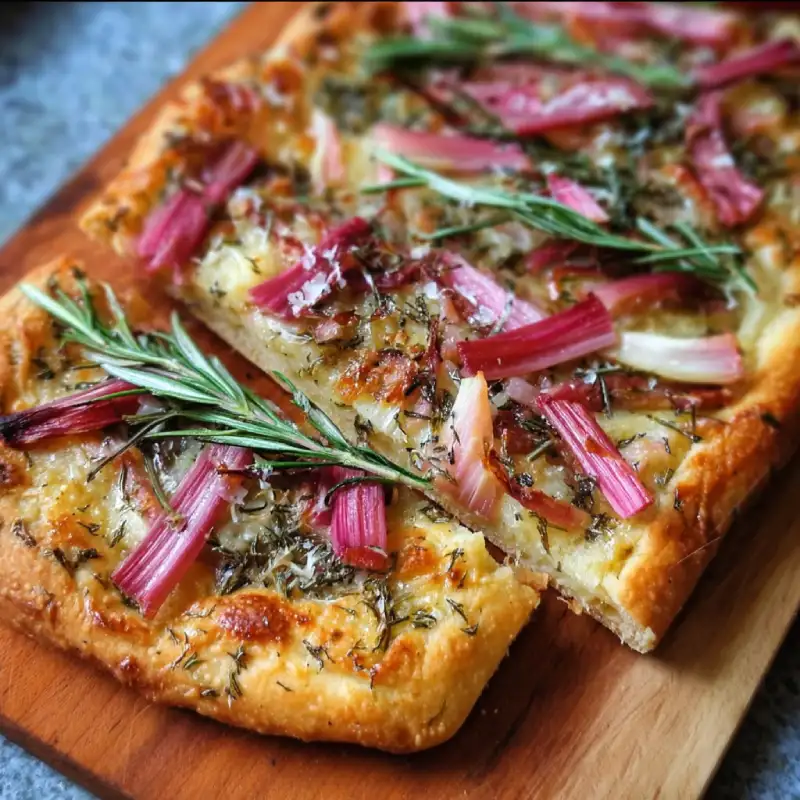
Introduction: Your New Favorite Spring Bake
Prepare to have your culinary world delightfully upended! This Rhubarb Rosemary Flatbread isn’t just a recipe; it’s an experience. Imagine a perfectly tender, slightly chewy flatbread, kissed with olive oil, providing the ideal canvas for a vibrant, tangy rhubarb topping. But here’s the twist: fragrant, earthy rosemary weaves its magic throughout, transforming what could be a simple sweet treat into something truly extraordinary – a harmonious dance between sweet, tart, and savory that will leave your taste buds singing.
Beyond Dessert: Why Rhubarb Deserves a Savory Spotlight
For too long, rhubarb has been pigeonholed into pies and crumbles. While delicious, its inherent tartness and unique fibrous texture make it an incredibly versatile ingredient, begging to be explored beyond the dessert plate. When paired with the right savory elements, rhubarb shines, offering a bright, acidic counterpoint that elevates dishes in unexpected ways. This flatbread is a testament to rhubarb’s untapped potential, proving it can be the star of a sophisticated, savory-leaning bake.
My Personal Journey to This Unexpected Flavor Combination
My love affair with rhubarb began in my grandmother’s garden, where stalks as thick as my arm grew in abundance. I adored her rhubarb pie, but one spring, I found myself with an overflowing bounty and a desire to experiment. I’d been playing with savory fruit pairings – figs with prosciutto, apples with cheddar – and a thought sparked: what about rhubarb with an herb? Rosemary, with its piney, slightly peppery notes, seemed like a bold, yet intriguing, partner. The first bite of that experimental flatbread was a revelation. The sharp tang of the rhubarb, softened by a touch of sugar, met the aromatic embrace of rosemary, all grounded by a chewy, olive oil-rich dough. It was unexpected, utterly delicious, and instantly became a spring baking staple in my kitchen.
Table of Contents
- Introduction: Your New Favorite Spring Bake
- Why This Recipe Works: Flavor & Texture Explained
- Ingredients & Intent: What You Need & Why
- Step-by-Step: Crafting Your Rhubarb Rosemary Flatbread
- Expert Tips for Flatbread Success
- What to Serve With Your Rhubarb Rosemary Flatbread
- Storing & Reheating Your Delicious Leftovers
- Frequently Asked Questions About Rhubarb Rosemary Flatbread
Why This Recipe Works: Flavor & Texture Explained
- The Tangy-Herbal Balance: Rhubarb, Rosemary, and Their Synergy: This isn’t just a random pairing; it’s a carefully orchestrated flavor symphony. The bright, almost citrusy tartness of the rhubarb is beautifully mellowed by a hint of sugar, while the robust, earthy, and slightly peppery notes of fresh rosemary cut through the sweetness, creating a complex, sophisticated profile that’s utterly addictive. They complement each other in a way that makes both ingredients shine brighter.
- Perfectly Tender Dough: Achieving that Ideal Flatbread Chew: Our dough is designed for success. A combination of active dry yeast, warm water, and a touch of olive oil creates a pliable, easy-to-work-with dough that bakes up incredibly tender with just the right amount of chew. The olive oil not only adds flavor but also contributes to the dough’s elasticity and a beautiful golden crust.
- Crispy Edges, Soft Center: The Secrets to Great Texture: The magic of this flatbread lies in its textural contrast. Baking at a relatively high temperature on a preheated baking sheet or pizza stone ensures those coveted crispy, golden-brown edges. Meanwhile, the well-hydrated dough and quick bake time keep the center wonderfully soft and airy, providing the perfect cushion for the juicy rhubarb topping.
Ingredients & Intent: What You Need & Why
Here is what you need and why:
Dough Essentials: Flour, Yeast, and the Role of Olive Oil: For this Rhubarb Rosemary Flatbread, we’re using all-purpose flour, which provides the perfect balance of gluten for structure and tenderness. Active dry yeast is our leavening agent, responsible for that beautiful rise and airy texture. And extra virgin olive oil? It’s not just for flavor; it adds richness, helps tenderize the dough, and contributes to a lovely golden crust. Don’t skimp on good quality olive oil here!
Rhubarb: Choosing Fresh Stalks for Best Flavor (No mushy stuff!): Look for firm, crisp rhubarb stalks with a vibrant pink or reddish hue. Avoid any stalks that are limp, bruised, or discolored, as these will result in a mushy topping. Freshness is key for that signature tangy bite.
Fresh Rosemary: The Aromatic Powerhouse and Why Dried Won’t Do: This is non-negotiable! Fresh rosemary provides an unparalleled aromatic punch that dried simply cannot replicate. Its piney, slightly citrusy, and peppery notes are crucial to the unique flavor profile of this flatbread. Dried rosemary can be too brittle and lack the vibrant oils needed.
Sweetness and Balance: Sugar’s Role Beyond Flavor: A small amount of granulated sugar is used in the dough to feed the yeast, aiding in its activation and rise. In the topping, it balances the intense tartness of the rhubarb, creating a more palatable and harmonious flavor without making the flatbread overly sweet.
Savory Notes: Sea Salt and Black Pepper’s Importance: Fine sea salt enhances all the flavors in both the dough and the topping. A generous grind of fresh black pepper in the topping adds a subtle warmth and a touch of savory complexity that truly elevates the rhubarb and rosemary pairing.
Ingredient Substitutions: Practical Alternatives and What to Avoid: While I highly recommend sticking to the recipe for the best results, if you must substitute, you can try using bread flour for a chewier crust (though it might be slightly less tender). For the herb, fresh thyme could offer a different but still pleasant savory note, but it won’t be the same as rosemary. Avoid substituting dried herbs for fresh, and definitely don’t use frozen rhubarb unless absolutely necessary, as it can release too much water and make the topping soggy. If you do use frozen, thaw it completely and drain very well.
Step-by-Step: Crafting Your Rhubarb Rosemary Flatbread
Follow these step-by-step instructions to create your perfect Rhubarb Rosemary Flatbread:
1. Activating the Yeast: The Foundation of a Good Dough
In a large bowl, combine warm water (around 105-115°F / 40-46°C – think warm bathwater, not hot!) with a pinch of granulated sugar and the active dry yeast. Stir gently and let it sit for 5-10 minutes. You should see a foamy, bubbly layer form on top, indicating your yeast is alive and ready to work its magic. If it doesn’t foam, your water might have been too hot or too cold, or your yeast is old. Start again with fresh yeast.
2. Mixing and Kneading: Hand vs. Stand Mixer for Optimal Gluten Development
Once your yeast is active, add the olive oil, salt, and about half of the flour to the yeast mixture. Mix with a wooden spoon or a stand mixer with a dough hook until just combined. Gradually add the remaining flour, a little at a time, until a shaggy dough forms. If using a stand mixer, knead on low speed for 5-7 minutes until the dough is smooth, elastic, and pulls away from the sides of the bowl. If kneading by hand, turn the dough out onto a lightly floured surface and knead for 8-10 minutes, pushing and folding until it’s smooth and springy. It should be slightly tacky but not sticky.
3. First Rise: Creating Air and Flavor in Your Dough
Lightly grease a clean bowl with olive oil. Place the kneaded dough in the bowl, turning it once to coat. Cover the bowl tightly with plastic wrap or a clean kitchen towel. Let it rise in a warm, draft-free place for 1 to 1.5 hours, or until it has doubled in size. This first rise is crucial for developing flavor and creating that wonderful airy texture.
4. Preparing the Rhubarb Topping: Quick Prep for Even Distribution
While the dough is rising, prepare your topping. Wash and trim the rhubarb stalks, then slice them into thin, 1/4-inch pieces. In a medium bowl, combine the sliced rhubarb with granulated sugar, finely chopped fresh rosemary, a pinch of sea salt, and a generous grind of fresh black pepper. Toss gently to coat. Set aside; the sugar will start to draw out some of the rhubarb’s juices, creating a lovely syrupy coating.
5. Shaping the Flatbread: Achieving the Perfect Thickness and Form
Once the dough has doubled, gently punch it down to release the air. Turn it out onto a lightly floured surface. You can either divide it into two smaller flatbreads or make one large one. Roll or gently stretch the dough into your desired shape (rectangle or oval), aiming for about 1/4 to 1/2 inch thickness. Transfer the shaped dough to a parchment-lined baking sheet. If you want to pre-bake for extra crispiness (see expert tips!), do so now.
6. Second Rise & Topping: Keys to a Beautiful Finish
Cover the shaped dough loosely with plastic wrap or a kitchen towel and let it rest for another 15-20 minutes. This short second rise helps the dough relax and ensures a tender crumb. Preheat your oven to 400°F (200°C) with a baking stone or inverted baking sheet inside, if using. Evenly scatter the prepared rhubarb and rosemary topping over the dough, leaving a small border around the edges. Drizzle lightly with a little extra olive oil.
7. Baking to Perfection: Temperature, Time, and Visual Cues
Carefully transfer the baking sheet to the preheated oven (or slide the flatbread onto the hot stone). Bake for 18-25 minutes, or until the crust is golden brown, the rhubarb is tender and slightly caramelized, and the edges are crisp. Keep an eye on it, as oven temperatures can vary. The aroma filling your kitchen will be your best visual cue! Once baked, remove from the oven and let cool slightly on the baking sheet before transferring to a wire rack.
Expert Tips for Flatbread Success
- Don’t Over-Flour: Keeping Your Dough Tender: When kneading or shaping, use just enough flour to prevent sticking. Too much flour will result in a dry, tough flatbread. A slightly tacky dough is a happy dough!
- Resting is Key: How to Avoid a Tough Flatbread: Don’t rush the rising times. Allowing the dough to properly rest and rise develops gluten and flavor, leading to a much more tender and flavorful flatbread. If the dough springs back too much when shaping, let it rest for another 5-10 minutes.
- Pre-Baking for Crispiness: A Pro Trick: For an extra crispy base, especially if your rhubarb is very juicy, you can pre-bake the plain dough for 5-7 minutes before adding the topping. This helps set the crust and prevents it from becoming soggy.
- Adjusting Sweetness and Herbiness: Customizing to Your Taste: Feel free to adjust the amount of sugar in the rhubarb topping based on your preference and the tartness of your rhubarb. Similarly, if you’re a huge rosemary fan, you can add a little extra, or dial it back if you prefer a more subtle hint.
- Use a Baking Stone or Inverted Baking Sheet: For the crispiest crust, preheat your oven with a baking stone or an inverted heavy-duty baking sheet inside. This provides a burst of high heat to the bottom of the flatbread, mimicking a professional pizza oven.
What to Serve With Your Rhubarb Rosemary Flatbread
This versatile Rhubarb Rosemary Flatbread can be enjoyed in so many ways!
- Light Lunches: Pairing with Salads and Cheeses: Serve a slice alongside a fresh, peppery arugula salad with a light vinaigrette, or with a creamy goat cheese or a sharp cheddar. The tang of the rhubarb and the earthiness of the rosemary beautifully complement these flavors.
- Savory Appetizers: Complementary Dips and Spreads: Cut into smaller squares and serve as an appetizer. It pairs wonderfully with a dollop of crème fraîche, a drizzle of balsamic glaze, or even a savory onion jam.
- Brunch Ideas: A Unique Addition to Your Spread: Elevate your brunch spread by offering this unique flatbread. It’s a fantastic alternative to traditional sweet pastries and pairs well with eggs, bacon, or a fruit platter.
Storing & Reheating Your Delicious Leftovers
While this Rhubarb Rosemary Flatbread is best enjoyed fresh from the oven, leftovers are still delightful!
- Airtight Storage: Maximizing Freshness: Store any leftover flatbread in an airtight container at room temperature for up to 2 days. For longer storage, refrigerate for up to 4 days.
- Best Reheating Methods: Oven vs. Toaster Oven for Crispiness: To bring back that lovely crispness, reheat slices in a toaster oven or a conventional oven at 350°F (175°C) for 5-10 minutes, or until warmed through and the crust is crisp again. Microwaving is not recommended as it will make the flatbread soggy.
- Freezing Instructions: For Future Enjoyment: You can freeze individual slices or the whole flatbread (once completely cooled) by wrapping it tightly in plastic wrap, then in aluminum foil. It will keep in the freezer for up to 1 month. Thaw at room temperature, then reheat as directed above.
Frequently Asked Questions About Rhubarb Rosemary Flatbread
Can I use frozen rhubarb?
What if my dough isn’t rising?
Can I make this gluten-free?
Is this flatbread more savory or sweet?
I hope you enjoy baking and savoring this unique Rhubarb Rosemary Flatbread as much as I do! It’s a true celebration of spring flavors. See more easy recipes.
Rhubarb Rosemary Flatbread
- Total Time: 40 minute
- Yield: 8-10 servings
Description
Discover how to make the best Rhubarb Rosemary Flatbread with this step-by-step recipe. Easy to bake and packed with amazing flavor!
Ingredients
- 1 cup (240ml) warm water (105-115°F / 40-46°C)
- 1 tsp granulated sugar (for yeast)
- 2 ¼ tsp (1 packet) active dry yeast
- 2 tbsp extra virgin olive oil, plus more for greasing and drizzling
- 1 tsp fine sea salt (for dough)
- 2 ½ – 3 cups (300-360g) all-purpose flour, plus more for dusting
- 2 cups (approx. 250g) fresh rhubarb, trimmed and thinly sliced (¼ inch)
- ¼ cup (50g) granulated sugar (for topping)
- 1 tbsp fresh rosemary, finely chopped
- ¼ tsp fine sea salt (for topping)
- ¼ tsp fresh black pepper, freshly ground
Instructions
- Activate Yeast: In a large bowl, combine warm water, 1 tsp sugar, and yeast. Stir and let sit 5-10 minutes until foamy.
- Mix Dough: Add 2 tbsp olive oil, 1 tsp salt, and 2 cups flour to yeast mixture. Mix. Gradually add remaining flour until a shaggy dough forms.
- Knead Dough: Knead by hand on a lightly floured surface for 8-10 minutes, or with a stand mixer (dough hook) on low for 5-7 minutes, until smooth and elastic.
- First Rise: Lightly grease a clean bowl with olive oil. Place dough in bowl, turn to coat, cover, and let rise in a warm place for 1-1.5 hours, or until doubled.
- Prepare Topping: While dough rises, combine sliced rhubarb, ¼ cup sugar, chopped rosemary, ¼ tsp salt, and ¼ tsp black pepper in a bowl. Toss gently.
- Shape Flatbread: Gently punch down dough. Roll or stretch into a 1/4-1/2 inch thick rectangle or oval on a parchment-lined baking sheet.
- Second Rise & Top: Cover dough loosely and let rest 15-20 minutes. Preheat oven to 400°F (200°C) with a baking stone/inverted sheet. Evenly scatter rhubarb topping over dough, leaving a small border. Drizzle with olive oil.
- Bake: Bake for 18-25 minutes, until crust is golden brown and rhubarb is tender. Cool slightly before serving.
- Prep Time: 25 mins
- Cook Time: 20-25 mins